
Your body just grew and birthed a human being. That’s extraordinary—and also extraordinarily demanding on your physical system. The postpartum period brings joy, exhaustion, hormonal shifts, and a body that feels unfamiliar. While social media might pressure you to “bounce back,” real recovery is about rebuilding strength intelligently, addressing actual physical changes, and giving yourself the time your body needs to heal. Pilates offers an evidence-based approach to postpartum recovery that addresses core function, pelvic floor health, and whole-body strength without rushing the process.
What Actually Happens to Your Body During Pregnancy and Birth
Let’s be specific about the physical changes you’re recovering from:
Abdominal Changes:
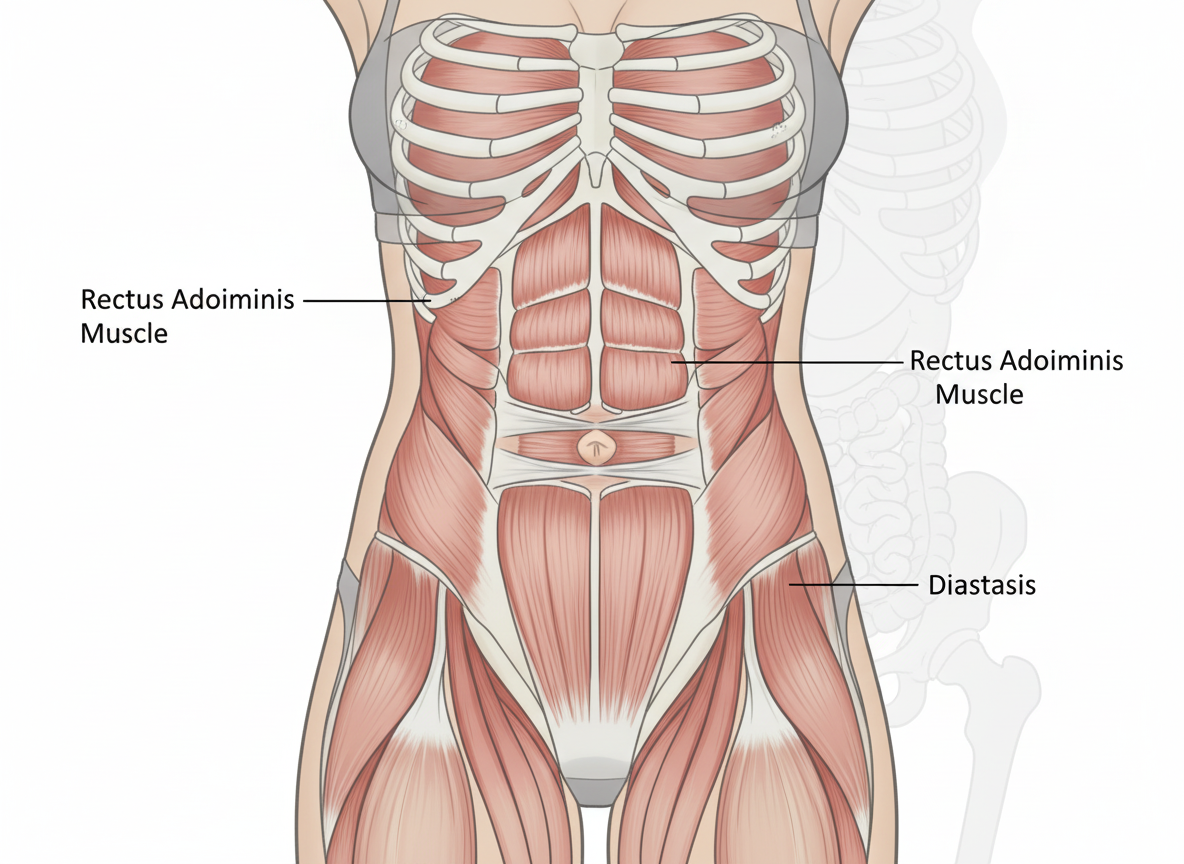
- Your rectus abdominis (six-pack muscles) separated to make room for your growing baby—this is diastasis recti, and some degree of separation is completely normal
- Your transverse abdominis (deep core corset) stretched significantly
- Your linea alba (the connective tissue down your midline) underwent massive stretching and may have weakened tissue integrity
Pelvic Floor Reality:
- These muscles stretched to 2-3 times their normal length during vaginal delivery
- They supported increasing weight throughout pregnancy
- They may have experienced tearing, episiotomy, or prolonged strain during labor
- Even with C-section births, pregnancy itself affects pelvic floor function due to months of increased load
Postural Changes:
- Your center of gravity shifted forward for months
- Your ribcage expanded to accommodate your growing uterus
- Your pelvis tilted, often creating excessive lumbar curve
- Your shoulders rounded forward from breast changes and feeding positions
C-Section Specific:
- Surgical incision through multiple tissue layers (skin, fascia, abdominal muscles, uterus)
- Potential nerve disruption around the incision site
- Scar tissue formation that can affect movement and sensation
- Additional recovery needs beyond typical postpartum changes
Understanding what you’re recovering from makes it clear why “just getting back to exercise” isn’t appropriate. You need targeted rehabilitation first, then progressive strengthening.
When to Start Postpartum Pilates
This is critical: Get clearance from your healthcare provider before starting any exercise program. Standard clearance comes at 6 weeks postpartum for vaginal delivery, 8-12 weeks for C-section, but your individual situation may require different timing.
Weeks 0-2: Rest and Gentle Movement Only
- Focus on healing, bonding, and basic activities of daily living
- Gentle walking is appropriate once you feel able
- Practice diaphragmatic breathing and pelvic floor awareness (not exercises yet)
- This is not the time for structured exercise
Weeks 2-6: Foundational Reconnection
- Begin gentle pelvic floor awareness and coordination exercises
- Practice deep breathing with slight core engagement
- Focus on posture awareness during feeding and holding baby
- Short, gentle walks as tolerated
- Still no formal Pilates practice
Week 6+ (After Medical Clearance): Progressive Return
- Start with gentle, modified mat Pilates focused on foundational movements
- Work with a pre/postnatal certified instructor who understands postpartum considerations
- Progress slowly based on your body’s response, not external timelines
- Listen to your body—if something doesn’t feel right, modify or stop
C-Section Recovery Timeline:
- Add 2-4 weeks to the above timeline
- Avoid exercises that stretch or strain your incision site until fully healed
- Be particularly cautious with exercises involving spinal flexion or twisting
- Scar tissue massage (once healed) can improve mobility and comfort
Addressing Diastasis Recti Through Pilates
Diastasis recti (DR) is the separation of your abdominal muscles along the midline. Some separation is normal and expected during pregnancy. The question is whether your core can function effectively postpartum.
What Matters More Than Gap Width: Current research shows that functional tension of the connective tissue matters more than the absolute width of the gap. You can have a 2-finger gap with good tension and function better than someone with a 1-finger gap and poor tissue quality.
How Pilates Helps:
Deep Core Activation: Pilates specifically targets your transverse abdominis, the muscle that acts as your natural corset and provides tensioning force to your linea alba.
Breath Coordination: Proper breathing creates intra-abdominal pressure management, which is essential for core function and protecting your healing tissues.
Progressive Loading: You can start with gentle, supported exercises and gradually increase challenge as your tissue heals and strengthens.
Safe Exercises for DR Recovery:
- Pelvic tilts and small bridges
- Heel slides and modified dead bugs
- Breathing exercises with intentional core engagement
- Side-lying leg work that doesn’t load the midline
- Modified planks from elevated positions
- Gentle cat-cow for spinal mobility
Exercises to Modify or Avoid:
- Traditional crunches and sit-ups (create excessive midline pressure)
- Full planks and push-ups initially (progress to these gradually)
- Double leg lowers (too much load)
- Roll-ups (modify significantly or skip until tissue is ready)
The Doming Test: Watch your abdomen during exercises. If you see a ridge or bulge along your midline (doming), you’re exceeding your tissue’s current capacity. This tells you to reduce range, decrease resistance, or choose a different exercise.
Rebuilding Your Pelvic Floor
One in three women experience pelvic floor dysfunction postpartum. This isn’t something to just live with—it’s treatable, and Pilates is part of the solution.
Common Pelvic Floor Issues:
- Urinary incontinence (leaking with coughing, sneezing, jumping, or laughing)
- Pelvic organ prolapse (feeling of heaviness or bulging)
- Pain during intercourse
- Inability to fully empty bladder or bowels
- Lower back or pelvic pain
How Pilates Addresses Pelvic Floor Function:
Pilates doesn’t just do isolated Kegels—it integrates pelvic floor function with breathing, core engagement, and whole-body movement. This reflects how your pelvic floor actually works in real life.
Coordination, Not Just Strength: Your pelvic floor needs to contract, relax, and coordinate with your breath and movement. Pilates teaches this functional coordination.
Pressure Management: Exercises that challenge your ability to manage intra-abdominal pressure (like modified planks or single-leg work) train your pelvic floor to function during real activities.
Postural Support: Better posture and core function reduce downward pressure on your pelvic floor, allowing it to function more effectively.
Key Pilates Exercises for Pelvic Floor:
- Breathing with pelvic floor coordination (exhale = gentle lift, inhale = release)
- Bridges with intentional pelvic floor engagement
- Side-lying leg work with core and pelvic floor connection
- Modified planks focusing on pressure management
- Standing work that integrates pelvic floor with functional movement
When to See a Pelvic Floor Physical Therapist:
Consider seeing a specialist if you experience:
- Any leaking of urine or feces
- Heaviness or bulging sensation in your vagina
- Pain during intercourse
- Inability to feel or control your pelvic floor muscles
- Pain in your pelvis, back, or hips that doesn’t resolve
Pelvic floor PT is specialized physical therapy focused on these muscles and is incredibly effective. It’s not a failure to need this care—it’s smart rehabilitation.
C-Section Recovery: Special Considerations
C-section is major abdominal surgery, and recovery requires specific attention:
Scar Tissue Management: Once your incision is fully healed (typically 6-8 weeks), gentle scar massage can improve mobility, reduce adhesions, and decrease numbness. Your pelvic floor PT can teach you techniques, or there are instructional videos from qualified providers.
Core Reconnection Challenges: The surgical incision cuts through multiple layers including your abdominal muscles, which can make it harder to feel and activate your core initially. This is normal and improves with time and practice.
Modified Exercise Approach:
- Avoid deep forward flexion initially (like full roll-ups)
- Be cautious with exercises that stretch your incision line
- Build core strength gradually from foundational exercises
- Use props and modifications liberally
Pilates Exercises Particularly Helpful for C-Section Recovery:
- Gentle breathing exercises to reconnect with your core
- Pelvic tilts and cat-cow for spinal mobility
- Side-lying work that doesn’t strain your incision
- Modified bridges for posterior chain strength
- Gentle standing exercises for functional strength
Restoring Posture and Alignment
Pregnancy and postpartum life (feeding, carrying baby, sleep deprivation) create predictable postural patterns:
Common Postpartum Posture Issues:
- Rounded shoulders from feeding and holding baby
- Forward head position
- Excessive lumbar curve or flattened lower back
- Rib cage that stays flared
- Weakened upper back muscles
How Pilates Corrects This:
Spine Articulation: Exercises like cat-cow and pelvic curls teach your spine to move segment by segment, restoring mobility.
Upper Back Strengthening: Swan variations and prone extension work strengthen your back extensors, counteracting forward rounding.
Shoulder Stability: Pilates shoulder work creates balanced strength around your shoulder girdle, improving posture naturally.
Core Integration: When your core functions well, your ribcage sits in proper alignment and your pelvis finds neutral position.
Body Awareness: The focused attention required in Pilates helps you notice and correct poor postural habits throughout your day.
Mental and Emotional Benefits
Postpartum is emotionally demanding. Sleep deprivation, hormonal shifts, identity changes, and physical recovery create a perfect storm for mood challenges.
How Pilates Supports Mental Health:
Stress Reduction: The breathing techniques and mindful movement activate your parasympathetic nervous system, reducing cortisol and promoting calm.
Body Autonomy: After months of pregnancy where your body served someone else’s needs, reclaiming your body through movement can be psychologically powerful.
Accomplishment: Progressive improvement in exercises provides tangible evidence of recovery and capability during a time when everything feels hard.
Community: Postnatal Pilates classes connect you with other new mothers experiencing similar challenges.
Self-Care: Taking an hour for yourself isn’t selfish—it’s essential for your wellbeing and your ability to care for your baby.
Finding Qualified Postnatal Pilates Instruction
Not all Pilates instructors have pre/postnatal training. Look for:
Specific Certifications: Pre/postnatal Pilates certification or training from recognized programs.
Understanding of DR and Pelvic Floor: They should assess for diastasis recti, ask about pelvic floor symptoms, and know how to modify exercises appropriately.
Progressive Programming: They should start you with foundational work regardless of your pre-pregnancy fitness level.
Medical Clearance Requirements: Reputable instructors require medical clearance before accepting postpartum clients.
Modification Options: Every exercise should have multiple modification levels for different recovery stages.
Realistic Expectations and Timeline
Month 1-2 (Post-Clearance): Focus on fundamental reconnection—breathing, gentle core activation, basic movements. Progress feels slow, and that’s appropriate.
Month 3-4: Noticeable improvements in core awareness and strength. You’re building capacity but still need significant modifications.
Month 6-9: Substantial progress in functional strength. You can perform more exercises with proper form and less modification.
Month 9-12: Continued strengthening and refinement. Many women feel “recovered” in this timeframe, though everyone’s timeline differs.
12+ Months: Ongoing strength building and progression toward pre-pregnancy abilities (or beyond).
Remember: These are averages. Your timeline depends on your pregnancy experience, birth outcome, pre-pregnancy fitness, number of previous pregnancies, and genetic factors.
What Doesn’t Help (Stop Doing These Things)
Rushing Your Recovery: Pushing too hard too soon can worsen diastasis recti, create pelvic floor problems, or cause injury.
Comparing to Others: Every pregnancy, birth, and body is different. Someone else’s timeline is irrelevant to yours.
Doing Traditional Ab Work Too Soon: Crunches and sit-ups before your core is ready can make problems worse, not better.
Ignoring Pain or Dysfunction: If something hurts or doesn’t feel right, address it with a healthcare provider. It won’t just get better on its own.
Trying to Achieve Your Pre-Baby Body: Your body accomplished something remarkable. It might not look exactly the same, and that’s okay.
The Bottom Line
Postpartum recovery isn’t about bouncing back—it’s about rebuilding intelligently. Pilates offers a systematic, evidence-based approach that addresses the specific changes your body underwent during pregnancy and birth.
Through progressive core strengthening, pelvic floor rehabilitation, postural restoration, and mindful movement, Pilates helps you recover function, reduce pain, and build sustainable strength. Combined with appropriate medical care, realistic expectations, and adequate time, you can emerge from postpartum feeling strong, capable, and connected to your body.
Your body deserves proper rehabilitation after what it accomplished. Pilates provides the framework to do that safely and effectively. Start where you are, progress at your pace, and trust that your body knows how to heal when given the right support.
Welcome to postpartum recovery. Take your time—you’ve earned it.